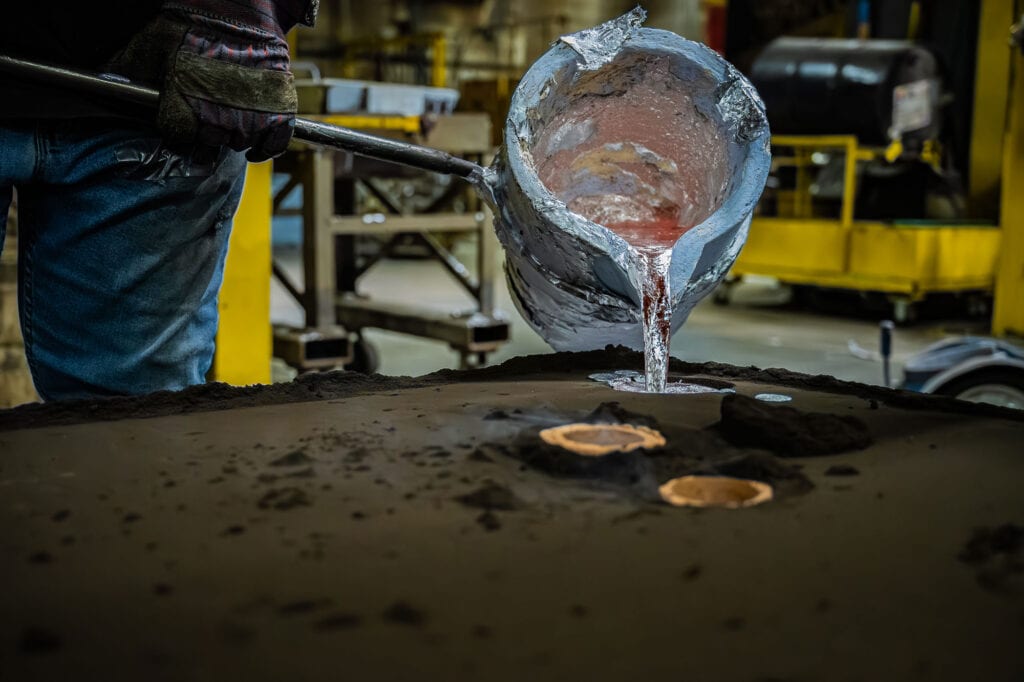
How Steel Casting Forms the Future of Ingenious Product Style and Growth
Steel casting is becoming a critical force in the domain name of product layout and advancement. Its capability to create complex geometries and lightweight structures uses developers new avenues for advancement. Coupled with innovations in modern technology and a concentrate on sustainability, steel casting methods are progressing. This evolution raises concerns concerning the future trajectory of layout throughout markets. What ramifications will these adjustments have for both consumers and manufacturers alike?
The Advantages of Steel Casting in Product Development
While various manufacturing strategies exist, metal spreading attracts attention for its unique advantages in item development. This method allows for the creation of complex forms and elaborate designs that may be impossible or challenging to accomplish with various other processes. The flexibility of metal casting allows the use of various materials, including iron, light weight aluminum, and bronze, providing developers with a wide variety of options to satisfy certain needs. Furthermore, metal casting is economical for both big and tiny manufacturing runs, as it decreases material waste and decreases the demand for substantial machining.
The durability and strength of cast steels contribute to the longevity of the final products, making them ideal for requiring applications. The capacity to produce large elements in a single piece minimizes setting up time and boosts structural stability. On the whole, metal casting acts as a fundamental strategy that supports development and efficiency in item development throughout countless markets
Ingenious Applications of Steel Casting in Numerous Industries
Metal casting plays a considerable role in various industries, showcasing its cutting-edge applications past standard manufacturing. In the automotive market, for instance, steel casting enables the manufacturing of light-weight yet sturdy components, improving fuel effectiveness and efficiency. Aerospace markets make use of advanced casting methods to develop complex parts that fulfill strict security and weight requirements, assisting in the development of advanced aircraft layouts.
In the energy field, metal casting is important for manufacturing generator elements and structural elements that stand up to severe problems. The clinical area benefits from custom-made castings for medical tools and prosthetics, enabling specific tailoring to specific client needs. Additionally, the imaginative sector utilizes metal spreading to generate decorative products and elaborate sculptures, combining modern technology with imagination. These diverse applications show exactly how steel spreading not just sustains traditional manufacturing but also drives development throughout numerous fields, leading the way for new items and solutions.
The Function of Sustainability in Metal Spreading Practices
As markets significantly prioritize environmental obligation, the assimilation of sustainability right into steel spreading methods has ended up being necessary. This shift is driven by the requirement to reduce waste, save energy, and limitation greenhouse gas exhausts. Many foundries are embracing recycled materials, using scrap metal to reduce the need for virgin sources. On top of that, developments in energy efficiency are being implemented, such as using electrical heating systems and enhancing heat recuperation systems.
Water usage is an additional prime focus, with methods targeted at lessening intake and guaranteeing proper treatment of wastewater. The implementation of green binders and layers is gaining grip, decreasing dangerous discharges during the spreading procedure. By welcoming these lasting methods, the steel spreading industry not only boosts its eco-friendly footprint yet likewise meets the increasing consumer demand for environmentally accountable products. This alignment with sustainability principles positions steel spreading as a forward-thinking sector in the domain of innovative item style and advancement.
Improvements in Metal Casting Technology
The evolution of steel casting innovation is carefully connected to the sector's commitment to sustainability, promoting developments that enhance performance and product quality. Recent advancements include the advancement of innovative materials such as light-weight alloys, which boost strength-to-weight ratios while reducing general material usage. In addition, techniques like 3D printing and additive production have acquired grip, permitting more intricate geometries and reduced waste throughout the production process.
Automation and robotics have streamlined spreading operations, reducing human error and optimizing manufacturing rates. Enhanced simulation software application also plays an important duty by anticipating spreading flaws before they happen, thereby decreasing rework and scrap rates. These technical renovations not just sustain sustainable techniques however likewise empower click here designers to check out brand-new innovative opportunities, inevitably causing more innovative and eco-friendly items. The recurring integration of these developments remains to form the landscape of metal spreading, making it a pivotal part in product design and advancement.
Future Patterns in Item Style Driven by Steel Spreading
While advancements in steel casting technology lead the way for future patterns in product layout, designers are significantly using these advancements to produce more efficient and lasting items. The integration of 3D printing with steel spreading allows the production of complicated geometries that were formerly unattainable, permitting lightweight yet long lasting layouts. Furthermore, using recycled steels is obtaining grip, straightening with worldwide sustainability goals and decreasing the ecological impact of production.
Furthermore, innovations in simulation and modeling software permit developers to anticipate just how products will certainly behave under numerous problems, resulting in maximized designs with decreased waste. Metal Casting. Modification is additionally coming to be a prime focus, as metal spreading methods permit customized products without substantial boost. As these trends proceed to evolve, the partnership in between designers and metal casting experts will likely foster innovative services that accommodate both performance and visual charm in future product layouts
Frequently Asked Concerns
What Materials Are Typically Utilized in Steel Casting Procedures?

How Does Steel Casting Compare to 3D Printing in Product Design?
Metal casting provides toughness and scalability, suitable for automation, while 3D printing masters fast prototyping and modification. Each technique presents distinct advantages, influencing layout options based on project requirements and desired outcomes.
What Industries Advantage Many From Steel Spreading Innovations?
Automotive, aerospace, and production markets benefit most from metal casting advancements. These sectors utilize advanced metal casting strategies for creating intricate parts, improving efficiency, decreasing weight, and enhancing product properties, eventually bring about more reliable manufacturing processes.
Just How Do Steel Casting Strategies Vary Throughout Various Cultures?
Metal casting strategies vary significantly across societies, influenced by regional products, customs, and technical developments. Eastern societies frequently highlight elaborate designs, while Western techniques might focus on performance and mass production techniques.
What Precaution Are Necessary During Metal Spreading Operations?
Important safety and security steps during metal casting procedures include correct ventilation, individual safety tools, fire safety and security procedures, danger interaction, and regular training. Aluminum Foundry. These precautions aid decrease threats related to heats, poisonous fumes, and potential tools malfunctions